
Catalytic converter scrap value in Ontario is set by four things: whether the unit is OEM or aftermarket, its stamped code, the condition of the honeycomb core, and live platinum, palladium and rhodium prices. EcoScrap.ca grades converters by code and condition, picks up free anywhere within 200 km of Toronto and pays cash on the spot. Call (647) 915-5440 for today’s price.
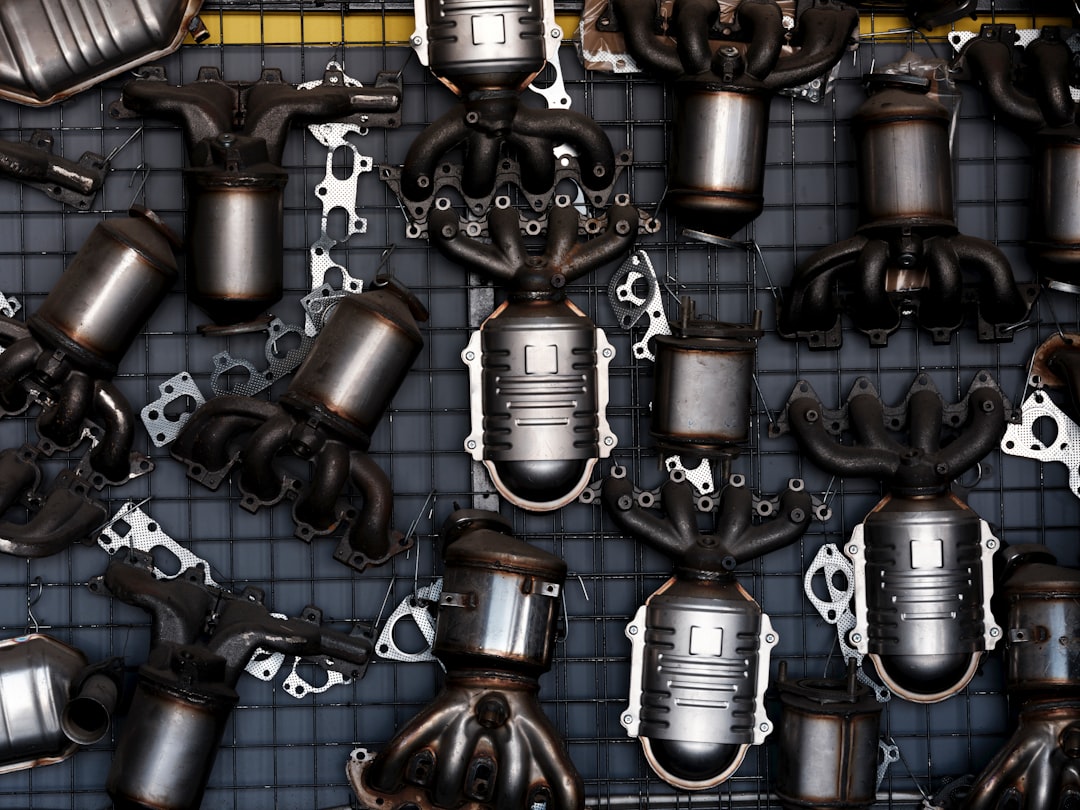
Catalytic converter scrap value is driven by the platinum group metals inside — see this overview of platinum group metals — and by how a catalytic converter is built.
If you have searched for “catalytic converter scrap price” you have probably seen numbers that seem to contradict each other. One website lists a price per piece, a forum post claims a much higher figure, and a local yard offers something else entirely. The reason is simple: there is no single price for a catalytic converter. Two converters that look almost identical can be worth very different amounts, and the same converter can be worth more or less from one month to the next.
This 2026 guide explains, in plain Canadian English, what actually determines a converter’s scrap value, how buyers grade them, why prices move, and what you can do — as a car owner, mechanic or muffler shop — to get paid more. When you are ready to sell, see our page on how to sell catalytic converters in Toronto, or just call us.
Why Are Catalytic Converters Worth Money as Scrap?
A catalytic converter cleans exhaust gases before they leave the tailpipe. Inside its stainless steel shell is a honeycomb-shaped core (the substrate) coated with a thin layer called the washcoat. That washcoat holds small amounts of three platinum group metals (PGMs):
- Platinum (Pt) — oxidizes carbon monoxide and hydrocarbons; very common in diesel oxidation catalysts.
- Palladium (Pd) — does a similar job and dominates most modern gasoline converters.
- Rhodium (Rh) — reduces nitrogen oxides (NOx); used in tiny amounts but extremely valuable per gram.
These metals do not wear out. When a converter reaches the end of its life — clogged, damaged, failing an emissions test, or simply coming off a scrapped vehicle — the PGMs can be recovered by specialized refiners and reused in new converters, electronics and industrial products. The scrap value of your converter is essentially your share of the value of those recoverable metals, after collection, processing and refining costs.
That is also why catalytic converter recycling in Ontario matters environmentally: recycling recovers metals that would otherwise have to be mined, and keeps converters out of landfills.
What Determines Catalytic Converter Scrap Value in Ontario?
Every reputable converter buyer works from the same basic factors. Here they are, roughly in order of importance.
1. OEM vs aftermarket
This is the biggest single factor. OEM converters are installed at the factory and are built to last the life of the vehicle under strict emissions rules, so they usually carry far more precious metal. Aftermarket converters are replacement units designed to a lower cost; they typically have much smaller PGM loadings and sell in a lower price band. An aftermarket unit from a large truck can be worth less than an OEM unit from a small car.
2. The stamped code (serial or part number)
OEM converters usually carry a manufacturer code stamped into the shell or heat shield. Buyers match that code against reference data built from laboratory assays of the same converter design. A readable code allows precise pricing; an unreadable or missing code forces the buyer to grade by type and size instead, which is usually more conservative.
3. Precious metal loading
Different vehicles use different recipes. Some converters lean heavily on palladium, others on platinum, and almost all three-way gasoline converters include some rhodium. Because each metal has its own market price, two converters with the same total grams of PGMs can still be worth different amounts. Hybrid vehicles and some larger engines are known for heavier loadings, while many economy cars are lighter.
4. Size, shape and number of bricks
More coated substrate generally means more metal. Large single units, dual converters from V6 and V8 engines and multi-brick assemblies tend to sit higher. Small close-coupled pre-cats (mounted at or near the exhaust manifold) can be surprisingly valuable because they are designed to light off quickly and are often well loaded.
5. Honeycomb condition
The metals sit on the honeycomb, so the core is the value. Buyers look into both ends of the converter to check it:
- Full and intact — full value for that grade.
- Cracked or rattling — still valuable if the pieces are inside the shell.
- Partially missing — priced on the estimated portion remaining.
- Empty or gutted — worth only the stainless steel shell.
- Melted, glazed or oil-soaked — graded case by case; often still worth something.
6. Ceramic vs metallic foil substrate
Most converters use a ceramic honeycomb. Some performance and European vehicles use a metallic foil core instead. Foil cores contain PGMs too, but they are processed differently and are usually priced on a separate scale.
7. Diesel aftertreatment type (DOC, DPF, SCR)
Diesel vehicles carry several units in the exhaust. The diesel oxidation catalyst (DOC) is usually platinum-coated and carries most of the value. The diesel particulate filter (DPF) traps soot and may have only a light coating; on its own it can be low value, though combined DOC/DPF assemblies can be worth more. SCR catalysts (used with diesel exhaust fluid) typically contain little or no PGM.
8. Live metal markets
Finally, all of the above is multiplied by the market. Platinum, palladium and rhodium are traded globally, and their prices respond to automotive demand, mining supply, industrial use and investor sentiment. When those markets move, converter prices move with them.
| Factor | Higher value | Lower value |
|---|---|---|
| Origin | OEM (factory) | Aftermarket / universal |
| Code | Clear, readable OEM code | Missing, rusted or ground off |
| Loading | Hybrid, some large engines, pre-cats | Many economy cars, aftermarket |
| Size | Large, dual or multi-brick | Small single-brick |
| Core | Full, intact honeycomb | Empty or gutted |
| Substrate | Ceramic honeycomb | Metallic foil (separate pricing) |
| Diesel units | DOC or combined DOC/DPF | DPF alone, SCR |
| Market | Rising Pt/Pd/Rh prices | Falling Pt/Pd/Rh prices |
Want to know what your converter is worth today?
Free pickup within 200 km of Toronto · Cash paid on the spot
📞 Call (647) 915-5440 NowWhy Can’t Anyone Give Me a Fixed Catalytic Converter Price?
Plenty of websites publish catalytic converter price lists, and it is tempting to treat them as gospel. There are three reasons to be careful:
- Prices go stale fast. A list compiled even a few weeks ago may not reflect the current PGM market.
- Lists cannot see your converter. A code tells a buyer what the converter was built with, but not whether the core is still inside or intact.
- Lists often hide deductions. Some quoted “up to” figures assume perfect condition and full assay value, before any processing costs.
At EcoScrap we do not publish a fixed price list for exactly these reasons. Instead, we quote against the market on the day you call, confirm the grade when we see the converter, and explain how we reached the number. Call (647) 915-5440 for today’s price.
How Do Typical Converter Categories Compare?
Rather than quote dollar figures that would be out of date by the time you read this, here is how common converter categories generally compare with one another. These are relative, not quotes — actual prices vary with the code, condition and market.
| Converter category | Typical relative value | Notes |
|---|---|---|
| Aftermarket universal (small) | Low | Light PGM loading; priced by size |
| Aftermarket direct-fit | Low to moderate | Varies by brand and size |
| OEM economy car | Moderate | Code matters a lot |
| OEM pre-cat / manifold cat | Moderate to high | Small but often well loaded |
| OEM truck / SUV (large or dual) | Moderate to high | More substrate; check both bricks |
| OEM hybrid | Often high | Frequently heavier loadings |
| Diesel DOC | Moderate to high | Usually platinum-rich |
| Diesel DPF only | Low to moderate | Light coating; graded individually |
| Metallic foil core | Varies | Separate processing and pricing |
| Empty / gutted shell | Scrap steel only | No substrate, no PGM value |
How Do Buyers Grade Catalytic Converters?
Grading is how a buyer places your converter into a group with a known expected value. The process at EcoScrap — and at most professional buyers — looks like this:
- Sort by type. OEM, aftermarket, pre-cat, diesel DOC/DPF or foil.
- Read the code. Match the OEM code to reference assay data where possible.
- Inspect the core. Look through both ends for intact, cracked, missing or contaminated substrate.
- Measure size and bricks. Used to grade units with no readable code.
- Price against today’s market. Apply current platinum, palladium and rhodium values to the grade.
- Explain the result. A good buyer will tell you what grade each unit received and why.
Some large processors go one step further and “decan” converters — cutting the shell open, removing the substrate, grinding it into powder and sending a sample to a lab for assay. That is how reference data for each code is built. For most sellers, especially individuals and small shops, code-and-condition grading is faster and gives a fair result without waiting weeks for lab results.
What Happens to a Scrap Catalytic Converter After You Sell It?
Understanding the recycling chain helps explain why a scrap buyer cannot pay the full market value of the metals inside. Here is the typical path a converter takes after it leaves your shop or driveway:
- Collection and grading. A buyer like EcoScrap collects converters, grades them and consolidates them into larger lots.
- Decanning. Processors cut open the stainless steel shells and remove the ceramic or foil substrate. The shells go to stainless steel recycling.
- Milling and sampling. The substrate is crushed and milled into a fine, uniform powder, and a representative sample is taken.
- Assay. A laboratory measures the platinum, palladium and rhodium content of the sample, usually in parts per million.
- Refining. Refiners use high-temperature smelting and chemical processes to separate and purify the PGMs.
- Reuse. Recovered metals go back into new catalytic converters, electronics, dental and medical products, jewellery and industrial catalysts.
Each step has costs — transport, labour, processing, lab fees and refining charges — and refiners do not recover 100% of the metal. A fair scrap price reflects the recoverable metal value minus those costs. That is normal across the industry, and it is why a buyer quoting a figure equal to the full “spot” value of the metals should make you sceptical.
Scrap Value vs Replacement Cost: Why the Gap Is So Big
Car owners are often surprised that a converter which costs a lot to replace brings in far less as scrap. The replacement price includes manufacturing, the new substrate and washcoat, the shell, distribution, retail margin and installation labour. The scrap price only reflects the recoverable precious metal, after processing. A worn-out converter has also usually lost some catalytic efficiency, though most of its metal remains. In other words, scrap value and replacement cost measure two very different things.
If you are paying for a converter replacement at a shop, it is worth asking whether you can keep the old unit, or whether its scrap value is being credited on your invoice. Many shops sell the removed converters as part of their regular scrap stream.
Common Reasons Converters Are Replaced (and What It Means for Value)
- Clogged or restricted flow — often from oil burning or coolant leaks; the core is usually still inside and still valuable.
- Efficiency below threshold codes — the converter no longer cleans exhaust well enough; the metal is mostly still present.
- Rattling heat shield or broken core — value depends on whether the substrate pieces stay in the shell.
- Physical damage — from road debris, potholes or collisions; dents rarely matter if the core is intact.
- Melted core from misfires — unburned fuel can overheat and melt the substrate; graded individually.
- Rusted-out shell or pipes — common in Ontario because of winter road salt; the converter itself may still be in good shape inside.
In almost every case, a converter replaced for one of these reasons still has meaningful scrap value. The most common way value is lost is not failure — it is removing or damaging the core, or losing the code to rust.
How Does Vehicle Type Affect Converter Scrap Value?
Vehicle type is not a price on its own, but it gives useful clues about what is inside. These are general patterns only — the code and condition always decide the final grade.
Compact and economy cars
Smaller engines usually have smaller converters, and many economy models use lighter PGM loadings. Some, however, have a valuable pre-cat in addition to the main converter, so it is worth checking for both.
SUVs, pickups and V6/V8 vehicles
Larger engines move more exhaust, so they often use bigger converters or two separate units (one per cylinder bank). More substrate usually means more metal, though aftermarket replacements on these vehicles can still be modest in value.
Hybrids
Hybrid engines start and stop frequently and run cooler, so manufacturers often use heavier precious metal loadings to keep emissions in check. Many OEM hybrid converters sit toward the top of the value range.
Diesel pickups, vans and light commercial vehicles
Diesel systems split the job across a DOC, a DPF and often an SCR unit. The DOC usually carries the most platinum. Fleet operators should keep each component identified so they can be graded accurately.
European and performance vehicles
Some use metallic foil cores or unusual multi-piece designs. These can be valuable but are graded and priced on their own scale.
Ontario-Specific Things to Know
- Road salt and rust. Ontario winters are hard on exhaust systems. Rust can wipe out codes and rot pipes, so store removed converters indoors.
- Scrapping a whole vehicle. The converter is a big part of a junk car’s value; a buyer should account for it in the price of the car.
- Theft prevention. Because thefts have been common in the GTA, expect legitimate buyers to ask for photo ID and record converter sales.
- Removing a working converter from a vehicle that is still driven on the road is generally not permitted under emissions rules. Scrap converters should come from legitimate replacements or end-of-life vehicles.
Catalytic Converter Glossary
| Term | Meaning |
|---|---|
| PGM | Platinum group metals — platinum, palladium and rhodium in converters |
| Substrate / monolith | The honeycomb core that carries the precious metal coating |
| Washcoat | The coating on the substrate that holds the PGMs |
| OEM | Original equipment manufacturer — installed at the factory |
| Aftermarket | A replacement converter made by a non-factory supplier |
| Pre-cat | A small converter mounted at or near the exhaust manifold |
| DOC | Diesel oxidation catalyst, usually platinum-rich |
| DPF | Diesel particulate filter that traps soot |
| SCR | Selective catalytic reduction, used with diesel exhaust fluid |
| Decanning | Cutting open the shell to remove the substrate |
| Assay | Laboratory test of the metal content in a milled sample |
Who Sells Scrap Catalytic Converters in Ontario?
Most scrap converters come from ordinary, legitimate repair work:
- Muffler and exhaust shops replacing failed or damaged exhaust systems.
- Mechanics and auto repair shops fixing emissions-related check-engine codes and failed converters.
- Dealership service departments handling warranty and customer-pay repairs.
- Fleet operators maintaining vans, pickups and light-duty diesel vehicles.
- Body shops and tire shops that remove exhaust sections during repairs.
- Private owners who kept their old converter after a repair, or who are scrapping a car. If you are selling a whole vehicle, our guide on how to sell a junk car in Ontario explains the process; see also cash for junk cars.
Shops that generate converters every week can benefit from a recurring pickup. Read about our scrap program for mechanic, tire and muffler shops.
How to Get Paid More for Your Catalytic Converter
You cannot change what metals the factory put into your converter, but you can avoid losing value. These are the habits that consistently lead to better payouts:
Protect the code
Do not grind, cut through or paint over the code area. If the code is faint, take a clear photo before the converter sits outside and rusts further, and write the year, make and model on the shell with a paint marker.
Keep the core inside
Never knock out the honeycomb to “check” it or to lighten the load. If the core is broken and rattling, leave the pieces in the shell. Buyers pay for what is inside.
Separate OEM from aftermarket
Shops that keep separate bins get faster, more precise grading. Mixed bins can result in conservative pricing because each unit has to be sorted on the spot.
Cut cleanly
Cut the converter off with a few inches of pipe on each side. Long sections of pipe and muffler add weight but not converter value — sell those separately as exhaust scrap.
Store indoors and dry
Moisture causes rust that eats codes and can contaminate cores. A covered bin or indoor shelf keeps converters in sellable condition.
Sell regularly instead of hoarding
It is tempting to hold converters waiting for a price spike, but markets can fall as easily as they rise, and stored converters get damaged, rusty or lost. For most shops, regular selling at current market prices works out better over time.
Ask how the price was calculated
A buyer who cannot explain their number is a buyer to be cautious about. We will walk you through every grade. Call (647) 915-5440.
Get a fair, explained price for your converters
Free pickup within 200 km of Toronto · Cash paid on the spot
📞 Call (647) 915-5440 NowRed Flags When Selling a Catalytic Converter
- “Highest price guaranteed” promises with no explanation of grading.
- Flat per-piece pricing that ignores OEM vs aftermarket — you are likely being underpaid on good units.
- No ID requested — legitimate buyers record converter purchases.
- Pressure to decide immediately without letting you see how each unit was graded.
- Quotes that change dramatically on arrival without a clear reason tied to the converter’s condition.
Do You Need ID to Sell a Catalytic Converter in Ontario?
Expect to show valid government-issued photo ID. Catalytic converter theft has been a widespread problem across Ontario, and responsible buyers verify who they are buying from and keep records of each transaction. At EcoScrap, ID is required for every converter sale and we record the details. We do not buy stolen parts.
If you are a private seller, it helps to be able to explain where the converter came from — for example, a repair invoice from the shop that replaced it, or the vehicle it was removed from. If you are selling a whole vehicle with the converter still on it, you will need the vehicle ownership permit signed over; remember to keep your plates and cancel your insurance once the car is gone. This is general information, not legal advice.
How Selling a Catalytic Converter to EcoScrap Works
- Call (647) 915-5440 with the number of converters, any codes, whether they are OEM or aftermarket, and your location.
- Get a free quote based on today’s market — often a firm number for coded units, a range for mixed lots.
- Book a free pickup anywhere within 200 km of Toronto; same-day is often available in the GTA.
- We grade on site and show you how each unit was priced.
- Show your photo ID so we can record the sale.
- Get paid on the spot in cash, or by e-Transfer if you prefer.
Full details are on our sell catalytic converters page.
Why Sell to EcoScrap?
- Free pickup within 200 km of Toronto — we come to your shop or driveway and load it ourselves.
- Cash paid on the spot, or e-Transfer if you prefer.
- Code-and-condition grading with a clear explanation of every price.
- Market-based quotes tied to live platinum, palladium and rhodium prices.
- One pickup for all your scrap — converters, rims, rotors, metals, parts and junk cars.
- Responsible buying — ID and records on every converter purchase.
Where Does EcoScrap Buy Catalytic Converters?
We buy converters across the GTA, the Golden Horseshoe and everywhere within about 200 km of Toronto. Pickup is free throughout the area — learn more about our free scrap pickup within 200 km of Toronto.
- Toronto & GTA: Toronto, Etobicoke, North York, Scarborough, Mississauga, Brampton, Vaughan, Markham, Richmond Hill.
- York Region & north: Newmarket, Aurora, Barrie, plus King City, Stouffville, Bradford, Innisfil, Alliston, Orillia, Collingwood and Wasaga Beach.
- Halton, Hamilton & Niagara: Oakville, Burlington, Milton, Hamilton, St. Catharines, plus Stoney Creek, Grimsby, Niagara Falls and Welland.
- Durham & east: Ajax, Pickering, Whitby, Oshawa, Peterborough, plus Bowmanville, Clarington, Port Hope, Cobourg, Uxbridge and Lindsay.
- Waterloo Region & southwest: Kitchener, Cambridge, Guelph, Brantford, London, plus Waterloo, Woodstock, Stratford, Simcoe and Fergus.
- Peel & Dufferin: Caledon, Bolton, Georgetown, Halton Hills and Orangeville.
Related Guides and Services
- Sell catalytic converters for cash in Toronto & Ontario
- Scrap program for mechanic, tire and muffler shops
- Scrap alloy rims and wheels and scrap rim prices: aluminum vs steel
- Sell used and scrap car parts
- Scrap metal pickup — copper, brass, aluminum, rotors and more
- Cash for junk cars and how to sell a junk car in Ontario
- Free scrap pickup within 200 km of Toronto
Sell your catalytic converters today — we come to you
Free pickup within 200 km of Toronto · Cash paid on the spot
📞 Call (647) 915-5440 NowCatalytic Converter Scrap Value FAQs
What is the scrap value of a catalytic converter in Ontario?
There is no single price. Value depends on OEM vs aftermarket, the stamped code, size, honeycomb condition and live platinum, palladium and rhodium prices. Call (647) 915-5440 for today's price.
Which catalytic converters are worth the most?
OEM converters with intact cores generally bring the most, especially many hybrid units, larger or dual converters, pre-cats and platinum-rich diesel oxidation catalysts.
Why is my aftermarket converter worth so little?
Aftermarket converters are built to a lower cost and usually contain much less platinum, palladium and rhodium than factory OEM units.
Does the code on the converter matter?
Yes. The OEM code links the converter to reference assay data, allowing more accurate pricing. Missing codes mean grading by type and size instead.
Is a rattling catalytic converter still worth money?
Yes, as long as the broken honeycomb pieces are still inside. An empty or gutted converter is worth only scrap steel.
Are diesel DPFs worth anything as scrap?
Some are. Diesel oxidation catalysts usually carry the most value; particulate filters alone are often lower value; SCR units typically contain little or no precious metal.
Why do catalytic converter prices change?
Prices follow global platinum, palladium and rhodium markets, which move with automotive demand, mining supply and investor activity.
Should I wait for prices to go up before selling?
Markets can fall as easily as they rise, and stored converters can rust or get damaged. Most shops do better selling regularly at current prices.
Do I need ID to sell a catalytic converter?
Yes. Responsible buyers, including EcoScrap, require valid government photo ID and record each converter transaction. We do not buy stolen parts.
Does EcoScrap pick up converters for free?
Yes. Pickup is free anywhere within 200 km of Toronto, and we pay cash on the spot or by e-Transfer.
Can a shop sell converters in bulk?
Yes. Muffler shops, mechanics, dealerships and fleets can book scheduled pickups with unit-by-unit grading.
Have converters to sell? Call (647) 915-5440 for today’s price and a free pickup anywhere within 200 km of Toronto.