
The scrap car parts worth the most in Ontario are catalytic converters, followed by aluminum rims, alternators and starters, radiators and AC condensers, transmissions, engine blocks, batteries, wiring harnesses and cast iron brake rotors. EcoScrap.ca buys all of them across the GTA and within 200 km of Toronto, with free pickup and cash on the spot. Call (647) 915-5440 for today’s prices.
For background, see how catalytic converters work and how scrap metal is graded and recycled.
Not all scrap car parts are equal. A catalytic converter the size of a shoebox can be worth more than a whole pile of steel, while a heavy engine block may pay less per kilogram than a small bundle of copper wire. The difference comes down to one thing: what metal is inside, and how much of it.
This 2026 guide ranks the most valuable scrap car parts for Ontario mechanics, tire and muffler shops, fleets and car owners. We explain why each part is worth what it is, how to prepare it, and how to avoid the common mistakes that cost sellers money. We do not list dollar figures, because scrap prices follow live metal markets and change often. Instead, you will learn what drives value so you can sort your parts the smart way.
Quick Ranking: Which Scrap Car Parts Are Worth the Most?
Here is the short version. The table below ranks common scrap car parts by their typical value to a scrap buyer, with the main metal that drives that value. It is a general guide, not a price list.
| Rank | Part | Main valuable material | Why it pays |
|---|---|---|---|
| 1 | Catalytic converters | Platinum, palladium, rhodium | Precious metals in the coated core |
| 2 | Aluminum (alloy) rims | A356 cast aluminum alloy | Clean, single-alloy aluminum |
| 3 | Alternators and starters | Copper windings, steel, aluminum | High copper content for their size |
| 4 | Radiators and AC condensers | Aluminum, copper, brass | Non-ferrous metals, easy to grade |
| 5 | Transmissions | Aluminum case, steel internals | Heavy, with an aluminum housing |
| 6 | Engine blocks | Cast iron or aluminum | Weight; aluminum blocks pay more |
| 7 | Car batteries | Lead | Lead plates are recycled at scale |
| 8 | Wiring harnesses | Copper wire inside insulation | Copper, reduced by plastic weight |
| 9 | Brake rotors and drums | Grey cast iron | Clean cast iron beats mixed steel |
Prices for every item on this list move with commodity markets. For a quote on your scrap car parts today, call (647) 915-5440.
What Makes Scrap Car Parts Valuable?
Scrap buyers do not pay for parts as parts. They pay for the metal those parts contain. Four things decide how much a given part is worth:
- Type of metal. Precious metals (platinum group) are worth far more than copper, which is worth more than aluminum, which is worth more than iron and steel.
- Amount of metal. A heavier part, or one with more of the valuable metal inside, pays more.
- Purity. A part made of one clean metal is easier to recycle than a part mixed with plastic, rubber, glass or other metals.
- Market price. Metal prices change daily on world markets such as the London Metal Exchange. Scrap prices follow.
Keep these four factors in mind as you read the ranking. They explain why a small converter tops the list and why a heavy engine block sits near the middle.
Have a Pile of Scrap Car Parts? We'll Pick It Up Free
Free pickup within 200 km of Toronto · Cash paid on the spot
📞 Call (647) 915-5440 Now1. Catalytic Converters: The Most Valuable Scrap Car Part
Catalytic converters are the most valuable scrap car parts on almost every vehicle. Inside the steel shell is a ceramic or metallic honeycomb coated with small amounts of platinum group metals: platinum, palladium and rhodium. These metals are rare and costly, so even a few grams make a converter worth a lot more than its weight in steel.
The value of a converter depends on its type and code. Original equipment (OEM) converters usually contain more precious metal than aftermarket replacements. Converters from some hybrids and larger engines can carry more metal still. Diesel oxidation catalysts are also valuable. A converter whose core has been removed is worth only scrap steel.
How to get the most for converters
- Keep the converter whole. Do not cut it open or remove the honeycomb.
- Note the stamped code on the shell, or keep the vehicle year, make and model.
- Cut it out with a little pipe on each side rather than cutting into the shell.
- Bring ID. Responsible buyers record every converter purchase.
Learn more on our sell catalytic converters page and in our guide to catalytic converter scrap value in Ontario.
2. Aluminum Rims and Alloy Wheels
Aluminum rims are some of the cleanest scrap car parts you can sell. Most alloy wheels are cast from A356, an aluminum-silicon alloy that recyclers can melt back into new wheels and castings. Because the alloy is consistent, clean rims are graded separately from mixed aluminum and usually pay well per kilogram.
The key to value is cleanliness. Tires, valve stems, steel wheel weights and centre caps all reduce the grade. A rim with the tire still on is worth noticeably less than a clean rim. Chrome-plated aluminum rims are graded differently again, and steel rims are graded as steel.
Track the aluminum market on the LME aluminium alloy page, and read our scrap rim prices: aluminum vs steel guide or the scrap alloy rims and wheels page for more.
3. Alternators and Starters
Alternators and starters are small but valuable scrap car parts because they are packed with copper windings. They also contain steel and, in many cases, an aluminum housing. Buyers grade them as a mixed electric motor category, which typically pays more than plain steel because of the copper inside.
These units are common in every repair shop, and they add up fast. A bucket of old alternators and starters is one of the easiest ways for a mechanic to turn shop waste into cash. Keep them in their own container, away from general steel.
- Leave them whole; there is no need to break them down.
- Remove loose pulleys, brackets or wiring only if it is quick to do.
- Keep them dry so the weight on the scale is metal, not water.
4. Radiators and AC Condensers
Radiators and AC condensers are valuable because they are made almost entirely of non-ferrous metal. Most modern car radiators and condensers are aluminum with plastic end tanks. Older radiators, and many in heavy trucks, are copper and brass, which pay more again.
The main things that lower the value are plastic tanks, steel brackets and leftover coolant. An aluminum radiator with the plastic tanks cut off is graded higher than one with the tanks still attached. Copper-brass radiators should be kept apart from aluminum ones so each is graded correctly.
Radiator types at a glance
| Type | Main metals | Value notes |
|---|---|---|
| Aluminum radiator, plastic tanks | Aluminum + plastic | Common; cutting off tanks helps |
| Copper-brass radiator | Copper, yellow brass | Higher value; keep separate |
| AC condenser | Aluminum | Often graded with aluminum radiators |
| Heater core | Aluminum or copper-brass | Small, but adds up in bulk |
Have copper-brass radiators? See our page on selling scrap copper and brass.
Get Today's Price on Your Scrap Car Parts
Free pickup within 200 km of Toronto · Cash paid on the spot
📞 Call (647) 915-5440 Now5. Transmissions
Transmissions are heavy scrap car parts with a mixed metal content. Most modern automatic and manual transmissions have an aluminum case with steel gears, shafts and clutch packs inside. Buyers usually grade them as a separate category because the aluminum housing makes them worth more than plain steel.
Drain the transmission fluid before selling. A transmission full of fluid weighs more, but buyers deduct for it, and leaks make loading messy. Also remove the torque converter if it is easy to do, as it is often graded as steel.
6. Engine Blocks
Engine blocks are among the heaviest scrap car parts, but their value per kilogram depends on the material. Older engines and many truck engines use cast iron blocks. Many newer car engines use aluminum blocks and heads, which pay more because aluminum is worth more than iron.
A complete engine still has steel, iron and aluminum parts bolted together, plus oil and coolant. Buyers grade complete engines differently from stripped blocks. Draining all fluids is the single most important step. Removing the alternator, starter and wiring harness and selling them separately can also improve your total return.
- Aluminum block: higher value per kilogram.
- Cast iron block: graded with heavy iron; good weight, lower per-kilogram value.
- Complete engine: convenient, but the mixed content lowers the grade.
7. Car Batteries
Lead-acid car batteries are valuable because of the lead plates inside. Battery recycling is well established, and most of the lead and plastic in a lead-acid battery is recovered. Batteries are graded by weight and are always bought separately from other scrap.
Keep batteries upright, store them on a pallet or in a leak-proof container, and never stack them in a way that could crack the case. Do not drain the acid. Cracked or leaking batteries need careful handling, so mention them when you call.
Batteries are also one of the scrap car parts that should never go in the garbage or a general metal bin. Lead and acid need proper recycling, and keeping them separate protects your other scrap from contamination. Most shops keep a dedicated pallet or tray for old batteries next to the service counter.
Read more on our car battery recycling page.
8. Wiring Harnesses
Wiring harnesses contain copper, one of the most valuable base metals. The catch is that most of a harness is plastic insulation, connectors and tape. Buyers grade harnesses as insulated wire, which is priced on the expected copper recovery after the plastic is removed.
Clean, long runs of wire pay more than harnesses full of connectors and plastic clips. Keep wiring separate from steel, and remove large plastic pieces where you can. If you have stripped bright copper, that is graded far higher; see #1 and #2 copper on our copper and brass page.
9. Brake Rotors and Drums
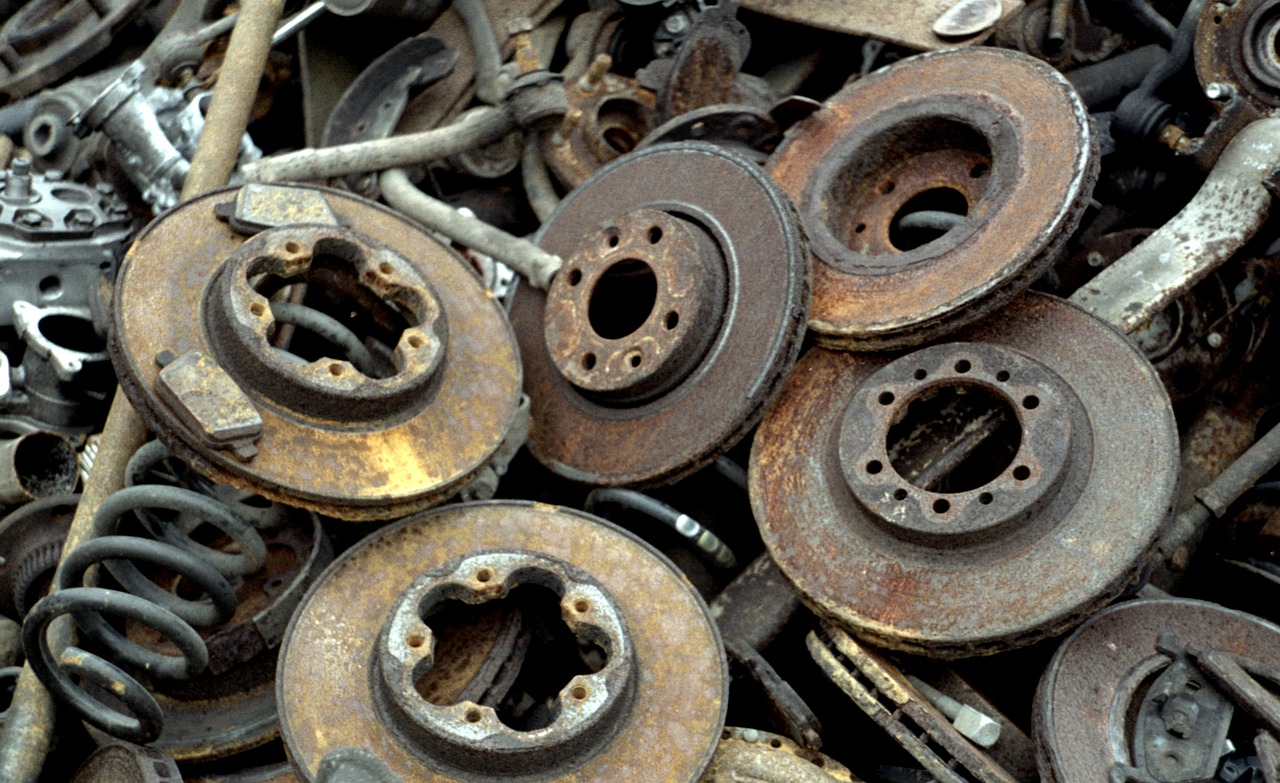
Brake rotors and drums are made of grey cast iron. Iron is worth less than aluminum, copper or precious metals, so rotors sit at the bottom of this ranking. However, clean cast iron is still a better grade than mixed light steel, so rotors are worth keeping separate.
For mechanic and brake shops, rotors are the most common scrap car parts of all, and the weight adds up quickly. Learn how to set up a rotor bin on our scrap brake rotors and drums page, or read about the disc brake system for background.
Sell All Your Scrap Car Parts in One Free Pickup
Free pickup within 200 km of Toronto · Cash paid on the spot
📞 Call (647) 915-5440 NowQuick Reference: Metals Found in Scrap Car Parts
If you remember only one thing from this guide, remember the metal hierarchy. Every scrap car part is worth roughly what its metals are worth, minus the cost of separating them. From most to least valuable per kilogram, the metals found in vehicles generally rank like this:
| Metal | Where you find it in a car | Relative value |
|---|---|---|
| Platinum, palladium, rhodium | Catalytic converter core | Highest by far |
| Copper | Alternators, starters, wiring, older radiators | High |
| Yellow brass | Older radiators, fittings | Medium-high |
| Lead | Batteries, older wheel weights | Medium |
| Aluminum | Rims, engine blocks, transmission cases, radiators, condensers | Medium |
| Stainless steel | Some exhaust parts | Medium-low |
| Cast iron | Brake rotors and drums, older engine blocks | Low, but above mixed steel |
| Mixed light steel | Body panels, brackets, exhaust pipe | Lowest |
Read more about the copper market on the copper page. When a part combines several metals, its value depends on how easily they can be separated. That is why a clean aluminum rim pays better per kilogram than a transmission, even though both contain aluminum.
This hierarchy also explains why sorting pays. If a copper-rich alternator ends up in a bin of mixed steel, the buyer may grade the whole bin as steel. Set aside the copper and aluminum items and each one is priced at its proper grade.
Value per Piece vs Value per Kilogram
One reason scrap car parts confuse sellers is that some are priced per piece and others per kilogram. Understanding the difference helps you sort your parts and compare quotes fairly.
- Per piece: Catalytic converters are usually priced unit by unit, based on their code and type, because two converters of the same weight can hold very different amounts of precious metal.
- Per kilogram: Most other scrap car parts, including rims, radiators, alternators, transmissions, engines, batteries, wiring and rotors, are priced by weight and grade.
When you compare quotes, make sure you are comparing like with like. A per-load price may sound simple, but it hides how each item was graded. Ask the buyer how they price converters, rims, copper-bearing parts and iron, and you will quickly see who is paying fairly for your scrap car parts.
This is why a converter can be worth more than a much heavier engine. The converter’s value comes from its precious metals, not its weight.
How to Sort Scrap Car Parts for the Best Price
Sorting is the simplest way to earn more from scrap car parts. A mixed pile is graded at the lowest common denominator. A sorted pile lets every metal be priced at its own grade. Here is a sorting plan that works for most shops:
- Converters — in a locked or secure area, one bin.
- Aluminum rims — tires, weights and stems removed.
- Alternators and starters — one bucket or tote.
- Radiators and condensers — aluminum and copper-brass in separate piles.
- Transmissions and engines — drained, on pallets.
- Batteries — upright, on a pallet or in a leak-proof tray.
- Wiring — bagged or in a box.
- Rotors and drums — in their own steel bin or on a pallet.
- Everything else — mixed steel pile.
Other Scrap Car Parts Worth Selling
The nine parts above are the main money-makers, but they are not the only scrap car parts with value. These items do not make the top of the list, yet they still pay more than letting them go to waste:
- Exhaust pipes and mufflers — mostly steel, sometimes stainless. Graded as steel, but easy to add to a pickup. Keep the converter separate.
- Steel rims — graded as heavy steel. Remove tires and weights first.
- Chrome rims — chrome-plated aluminum rims are graded separately from clean alloy wheels.
- Brake calipers — cast iron or aluminum; keep the two types apart.
- Copper and brass fittings — small brass fittings and copper lines add up in a shop over time.
- Steering racks, hubs and knuckles — heavy iron and aluminum parts that are better sorted than tossed in mixed steel.
If it is metal and it came off a vehicle, there is a good chance we buy it. Call (647) 915-5440 if you are unsure.
Does the Vehicle Type Change Which Parts Are Worth the Most?
Yes, to a degree. The ranking above holds for most cars on Ontario roads, but the type of vehicle can shift the value of certain scrap car parts:
- Hybrids: converters on some hybrid models tend to carry more precious metal, because the engine runs cooler and needs a stronger catalyst.
- Pickups and SUVs: larger engines often mean larger converters, heavier drums and rotors, and bigger radiators.
- Older vehicles: more likely to have copper-brass radiators and cast iron engine blocks.
- Newer cars: more aluminum in engines, wheels, radiators and suspension parts.
- Diesel vehicles: diesel oxidation catalysts and particulate filters are graded on their own.
- Commercial and fleet vehicles: heavy drums, large batteries and big radiators can make a fleet clean-out worthwhile.
This is why a good buyer asks what the parts came from. The same type of part can vary in value from one vehicle to another.
Common Mistakes That Lower the Value of Scrap Car Parts
Most sellers lose money on scrap car parts in the same handful of ways. Avoiding these mistakes is free and often makes a real difference:
- Throwing everything in one pile. A mixed pile is graded at the lowest value. Sorting takes minutes and pays.
- Cutting converters open. Once the honeycomb is damaged or removed, most of the value is gone.
- Leaving tires on rims. Rubber is a contaminant, and the rim is graded lower.
- Not draining fluids. Oil, coolant and transmission fluid are deducted and make loading messy.
- Mixing aluminum and copper radiators. The copper-brass radiators end up priced as aluminum.
- Storing parts outdoors uncovered. Water and dirt add weight that is not metal.
- Selling to the first flat-rate offer. A flat “per load” price ignores the grades. Ask how each metal is priced.
Selling Scrap Car Parts in Ontario in 2026: What to Know
Ontario has a large auto repair and recycling industry, from busy shops in the GTA to fleet yards along Highway 401 and the QEW. That means plenty of buyers, but also plenty of variation in how they grade and pay. A few things are worth knowing before you sell:
- ID is standard. Responsible buyers ask for photo ID and record catalytic converter sales. Be cautious of any buyer who does not.
- Prices are market-based. Expect quotes that reflect the day’s metal prices, not fixed rates.
- Pickup saves time. Hauling heavy parts to a yard costs fuel, time and a technician’s hours. Free pickup removes that cost.
- Sorting matters more than ever. Buyers and processors increasingly reward clean, sorted material and penalize mixed loads.
Whether you are a single-bay garage in Guelph or a dealership service department in Vaughan, the same rules apply: sort, drain and call for today’s price.
How Selling Scrap Car Parts to EcoScrap Works
- Call (647) 915-5440. Tell us what you have and roughly how much.
- Get today’s price. We quote from the current market for each metal.
- Book a pickup. Same-day or next-day pickup is often available within the GTA.
- We load it ourselves. No need to move heavy parts.
- We weigh and grade on site. You see the numbers before we leave.
- Get paid on the spot. Cash, or e-Transfer if you prefer.
We ask every seller to show valid government-issued photo ID, and we record catalytic converter and vehicle transactions. We do not buy stolen parts.
Who Sells Scrap Car Parts to Us?
- Mechanics and auto repair shops — alternators, starters, rotors, converters and more.
- Tire shops — rims, wheel weights and brake parts.
- Muffler and exhaust shops — converters and exhaust pipe.
- Body shops — radiators, condensers and damaged wheels.
- Dealership service departments — steady volume of all kinds of parts.
- Fleet operators — batteries, drums, transmissions and engines.
- Private car owners — parts from home repairs, or a whole junk car.
Shops can read our scrap program for mechanic, tire and muffler shops or visit the mechanic shop scrap pickup and tire shop scrap pickup pages.
Should You Sell Parts or the Whole Car?
If you own a junk car, you may wonder whether pulling the valuable scrap car parts first will earn more. Sometimes it can, but it takes time, tools and a safe place to work. Removing the converter or rims before selling a car can also lower the offer on the car itself, since the buyer prices the vehicle as it stands.
For most owners, selling the whole car is simpler. You will need to sign over the vehicle permit, keep your plates and cancel your insurance after the sale. See the Ontario government’s guidance on buying or selling a used vehicle, plus our cash for junk cars page and how to sell a junk car in Ontario guide.
Free Pickup of Scrap Car Parts Within 200 km of Toronto
We collect scrap car parts free of charge anywhere within 200 km of Toronto. That includes Toronto, Etobicoke, North York and Scarborough; Mississauga and Brampton in Peel; Vaughan, Markham, Richmond Hill, Newmarket and Aurora in York Region; and Ajax, Pickering, Whitby and Oshawa in Durham Region.
Farther out, we serve Oakville, Burlington, Milton and Hamilton in Halton and the Golden Horseshoe; St. Catharines, Niagara Falls and Welland in Niagara; Kitchener, Waterloo, Cambridge and Guelph; plus Barrie, Peterborough, Brantford and London. Smaller towns such as Orangeville, Bradford, Bowmanville, Cobourg and Woodstock are covered too.
See our free scrap pickup within 200 km of Toronto guide or our scrap metal pickup page for details.
Why Sell Your Scrap Car Parts to EcoScrap?
- We come to you — free pickup within 200 km of Toronto.
- We do the loading — no heavy lifting for you or your staff.
- Cash on the spot — or e-Transfer if you prefer.
- Every metal graded fairly — sorted parts are priced at their own grade.
- One pickup for everything — converters, rims, radiators, batteries, rotors and more.
- Responsible buying — photo ID and transaction records; no stolen parts.
Read more about EcoScrap, view all services or contact us.
Tips to Get More Money for Scrap Car Parts
- Sort by metal type. This is the biggest single factor you control.
- Drain all fluids from engines, transmissions, radiators and calipers.
- Remove tires, weights and valve stems from rims.
- Keep converters whole and note their codes.
- Cut plastic tanks off aluminum radiators when practical.
- Store parts dry and off the ground.
- Let volume build up so one pickup clears it all.
- Call (647) 915-5440 for today’s prices before you book.
Why Scrap Car Part Prices Change
Scrap car parts are priced from the commodity markets for the metals inside them. Aluminum, copper and lead trade on world exchanges such as the London Metal Exchange, and platinum group metals have their own markets. Iron and steel scrap prices follow demand from mills and foundries.
When those markets move, so do scrap prices. That is why responsible buyers quote on the day you call, rather than promising fixed prices. The Canadian recycling industry is represented by the Canadian Association of Recycling Industries, and Ontario’s approach to waste is described on the province’s waste management page.
Scrap Car Parts FAQs
Which scrap car part is worth the most?
The catalytic converter is usually the most valuable scrap car part because it contains platinum, palladium and rhodium.
Are aluminum rims worth more than steel rims?
Yes. Clean aluminum (alloy) rims are graded as aluminum and usually pay much more per kilogram than steel rims.
Why are alternators and starters worth scrapping?
They contain copper windings, which raise their value above plain steel.
Is a copper radiator worth more than an aluminum one?
Generally yes. Copper-brass radiators are graded higher than aluminum radiators with plastic tanks.
Are engine blocks valuable as scrap?
They are heavy, so they add weight, but cast iron blocks pay less per kilogram than aluminum blocks. Drain fluids first.
Do you buy used car batteries?
Yes. Lead-acid batteries are bought by weight and kept separate from other scrap.
How much are scrap car parts worth today?
Prices follow live metal markets and change often. Call (647) 915-5440 for today's prices.
Do you pick up scrap car parts for free?
Yes. Pickup is free anywhere within 200 km of Toronto, and we load everything ourselves.
How do you pay for scrap car parts?
Cash on the spot at pickup, or Interac e-Transfer if you prefer.
Do I need ID to sell scrap car parts?
Yes. We ask for valid government photo ID and record converter and vehicle purchases. We do not buy stolen parts.
Should I strip my junk car before selling it?
Usually not. Removing parts takes time and can lower the offer on the car. Selling the whole car is simpler for most owners.
Ready to Sell Your Scrap Car Parts? Call Now
Free pickup within 200 km of Toronto · Cash paid on the spot
📞 Call (647) 915-5440 Now